Warren Bellamy’s Capture and Interrogation
The Lost SymbolWarren Bellamy’s Capture and Interrogation turns Bellamy’s effort to protect Robert Langdon and the Masonic Pyramid into a contest over what must remain secret, who can be trusted, and what counts as a threat to national security. Bellamy is caught by the pursuing team in the Library of Congress stacks after helping Langdon escape with the pyramid and Solid-Gold Capstone. His captors then take him to The Jungle, where Inoue Sato questions him, lays out how she has pieced together the night’s events, and demands that he help bring Langdon and the objects into her custody.
Capture in the Library of Congress
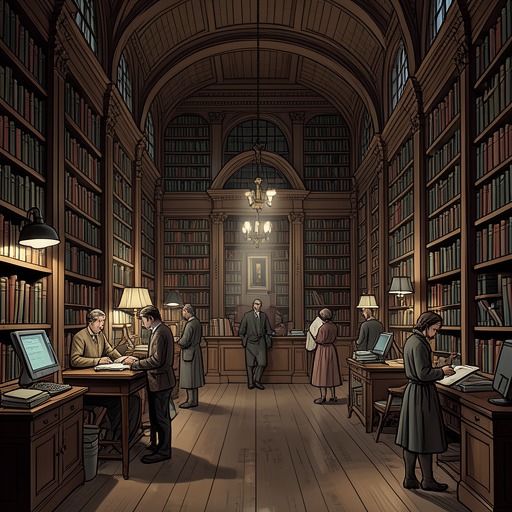
Turner Simkins and his team pursue the fleeing men through temperature-controlled stacks. The team’s thermal goggles reveal traces left on a banister, but the library’s motion-activated lights soon make the chase visible without them: each section of the fugitives’ route lights ahead like a trail. Simkins’s team follows it through the rows of books and closes on Bellamy, who is bringing up the rear. When repeated commands to stop have no effect, an agent fires a nonlethal restraint projectile. It hardens around Bellamy’s legs, bringing his flight to an end.
The capture changes the team’s understanding of the chase. The stacks ahead of Bellamy are dark; there is no other runner for the agents to pursue. Bellamy has been left alone, and the team has not caught Langdon. Simkins directs the others to continue searching while Bellamy is questioned. His captors demand to know where Langdon is. Bellamy answers with a deliberate lie: he claims he sent Langdon toward the balcony to hide behind the Moses statue, though he says he does not know where Langdon went afterward. The deception sends two agents away in pursuit and buys Langdon time.
Bellamy is bound and blindfolded, then marched through the stacks. The familiar ritual hoodwink of his Masonic initiation provides a pointed contrast: that blindfold had been worn among trusted brothers as part of a voluntary ascent through the degrees, whereas this one marks his capture and isolation. His confidence rests on a different fact: Langdon and Katherine Solomon are carrying the pyramid and capstone toward safety, and Bellamy has arranged for Langdon to seek sanctuary with someone who understands the objects’ secret.
Taken to The Jungle
The agents transport Bellamy in an SUV, stopping after a short drive and gaining entry to a nearby complex by invoking a CIA investigation and national security. Still blindfolded, Bellamy is led through secured doors and corridors into a warm, humid environment. He recognizes the destination only when its distinctive atmosphere gives it away: The Jungle, the greenhouse centerpiece of the U.S. Botanic Garden, close to the Capitol complex.
The place is familiar to Bellamy. He runs it, and his own key fob has helped the agents gain access. That reversal makes the greenhouse’s usual comfort feel different: a place associated with his work and with living growth has become the site of his confinement. His captors secure him to a bench and leave him alone, blindfolded. Inoue Sato then appears, removes the blindfold, and begins the interrogation.
Sato’s account of the night
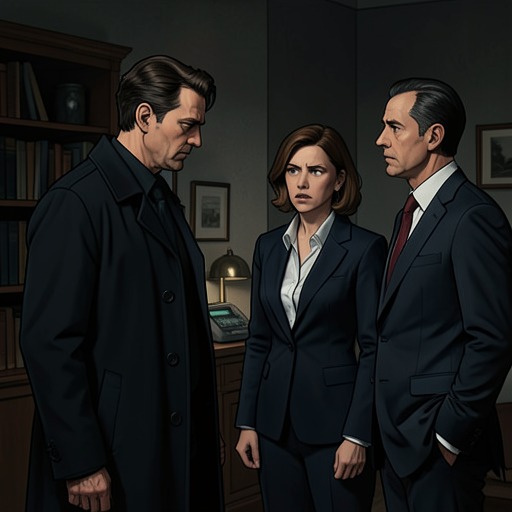
Sato challenges Bellamy’s version of events and describes what she knows: he received a call while dining outside the city from a man who said he had kidnapped Peter Solomon, sent Langdon to the Capitol with a task to complete, and threatened Peter’s life if Langdon failed. Bellamy had tried Peter’s numbers and, unable to reach him, hurried to the Capitol. Sato also knows that Bellamy later sent the kidnapper a text message saying that he and Langdon had obtained the Masonic Pyramid and would cooperate. In reality, Bellamy had meant the message to buy time and conceal the objects’ whereabouts.
Sato explains that the agents took Bellamy’s phone and that the USA PATRIOT Act wiretap authority gave her a way to monitor Peter’s calls. She says she had tapped Peter’s phone, which allowed her to hear Bellamy’s anxious message and the earlier call in which the kidnapper, posing as Peter’s assistant, persuaded Langdon to come to Washington with a package Peter had entrusted to him. That intercepted call prompted Sato to have Langdon’s bag examined by X-ray. The discoveries help explain why she arrived at the Capitol and why she knew to focus on Langdon’s belongings; they also show that she had assembled much of the night’s sequence without Bellamy’s cooperation.
Secrets, loyalties, and leverage
Bellamy suspects Sato is working against him and asks whether she intends to take the pyramid. She rejects that assumption. She says she, too, understands the need to keep certain information from the public, but argues that the kidnapper poses a danger far beyond the objects themselves. In her view, he is capable of setting off events that could profoundly change the world. Bellamy counters that his Masonic vows prevent him from revealing the location of the hidden spiral staircase associated with the Ancient Mysteries.
Sato asks Bellamy to call Langdon and tell him to surrender with the pyramid and capstone. Her plan, as she presents it, is to take Langdon into custody, have him decipher the pyramid’s inscription, and obtain the information the kidnapper wants. Bellamy refuses. His resistance makes the central conflict more than a disagreement about tactics: Sato invokes national security and an impending catastrophe, while Bellamy holds to obligations that prohibit him from handing over the secret.
Sato’s interrogation also clarifies the limits of her intelligence. She says the trace on Peter’s cell phone went dead before it revealed a location, and that another number appeared to be disposable. The private-jet booking, she tells Bellamy, had been made by Peter’s assistant using Peter’s phone and jet card, leaving no useful trail. Even finding the kidnapper would not necessarily make an intervention possible; Sato refuses to explain why, describing that information as classified. Her claims leave Bellamy with a picture of a crisis that she insists he cannot yet understand, but they do not resolve his distrust.
The widening pursuit
While Bellamy is being held, Sato receives updates about Langdon and Katherine. When one report places them in a taxi, she orders the field team to bring them to the U.S. Botanic Garden through the service entrance and to recover the pyramid and capstone. She then tells Bellamy that he has outlived his usefulness. Later, as the search continues and Sato grows more urgent, she asks him once more whether he knows where Langdon has gone. Bellamy does know, but denies it and will not betray the refuge.
Sato confronts him with the details of his earlier movements, including his flight from the Capitol and his text to the kidnapper. Bellamy is startled by the extent of her knowledge. When he questions how she obtained it, she again identifies the wiretap as her source and insists that Peter, Bellamy, and the Masons’ concealed knowledge all fall within her security concerns. Her attempt to recast them as allies does not persuade Bellamy: the restraints and her demands remain tangible, while her most consequential explanation for why she cannot simply move against the kidnapper remains withheld.
The exchange ends with Sato bringing in a titanium briefcase. She opens it, dismisses the agent who carried it, and tells Bellamy that what it contains will persuade him to see matters her way. The contents are not disclosed in this part of the confrontation. The unresolved threat of the case leaves the interrogation at a point of suspended leverage: Bellamy has protected Langdon’s escape through silence and misdirection, while Sato has exposed how much she knows and prepares a new means of pressure.